Argentina, reduced to 34% possession, their lowest share in a World Cup match since records began in 1966
Messi Goes Home Empty Handed
Zvakwana Sweto,
The fairy tale did not have its intended ending. In the shimmering cauldron of the New York New Jersey Stadium, under the glare of a global audience, Lionel Messi’s quest for a second consecutive World Cup title ended not with a bang, but with a whimper.
Spain, in a display of tactical mastery, dismantled the reigning champions 1-0 in extra time to claim their second FIFA World Cup crown, leaving the legendary number 10 to walk away with nothing but a silver medal and a trail of tears.
For 106 minutes, Argentina waited for a moment of magic. It never came. Spain’s suffocating possession football rendered the defending champions, and their captain, completely anonymous.
In a performance that bordered on the surreal, Argentina failed to muster a single shot on target during regular time, a statistic that speaks volumes about the chasm in quality on the night. Spain, by contrast, unleashed a relentless assault of 20 shots, completing 738 of their 817 passes and dictating the rhythm of the game from the first whistle to the last.
The match was a masterclass in control, orchestrated by Spain’s midfield and their relentless pressing. Fabian Ruiz and Pedri dominated the center of the park, while the dazzling width provided by Lamine Yamal, Dani Olmo and Nico Williams stretched the Argentine defense to its breaking point.
Argentina, reduced to 34% possession, their lowest share in a World Cup match since records began in 1966, simply could not escape their own half. The statistic that perfectly underscores their plight is that goalkeeper Emiliano Martínez, who made a string of heroic saves, finished the game as the player with the most touches for Argentina.
Lionel Messi
Messi, at 39 years old, who had carried Argentina through the tournament with eight goals and four assists, found himself isolated and shut down. Every touch was greeted by a swarm of red shirts, every passing lane closed, every avenue of influence suffocated.
He registered just 55 touches and none in the Spain penalty area. It was a performance far removed from the player who had scored in his consecutive World Cup appearances and rewritten the competition’s record books. Spain completely took him out of the game; he rarely received the ball, and when he did, it was often on the sideline with nowhere to go.
The deciding moment came in the 106th minute. Nico Williams delivered a cushioned header into the path of Ferran Torres, who fired a finish beyond the valiant Martínez. The goal was a long time coming for Spain and one that Argentina could not argue against. Their hopes had already been dealt a significant blow when Enzo Fernández was shown a red card in stoppage time for a foolish challenge, forcing his side to play the remainder of the match with ten men.
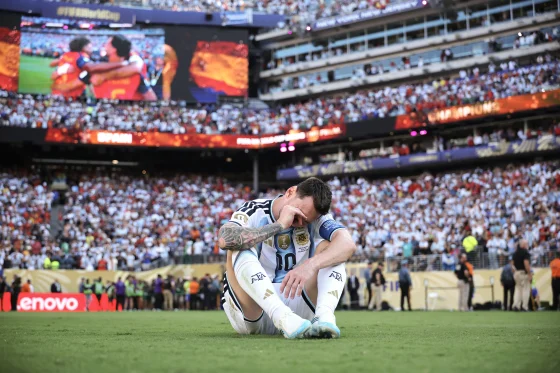
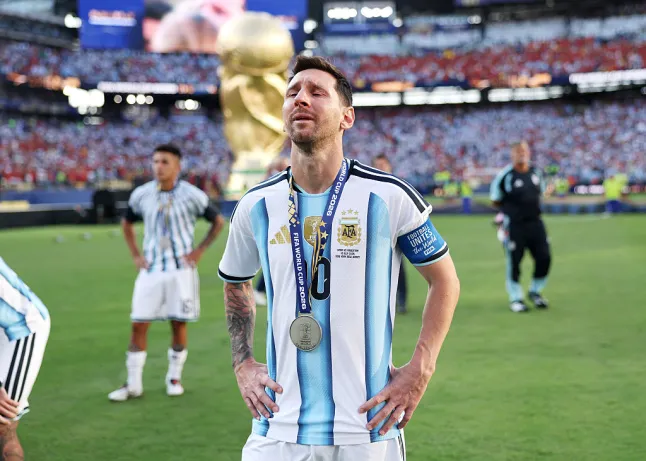
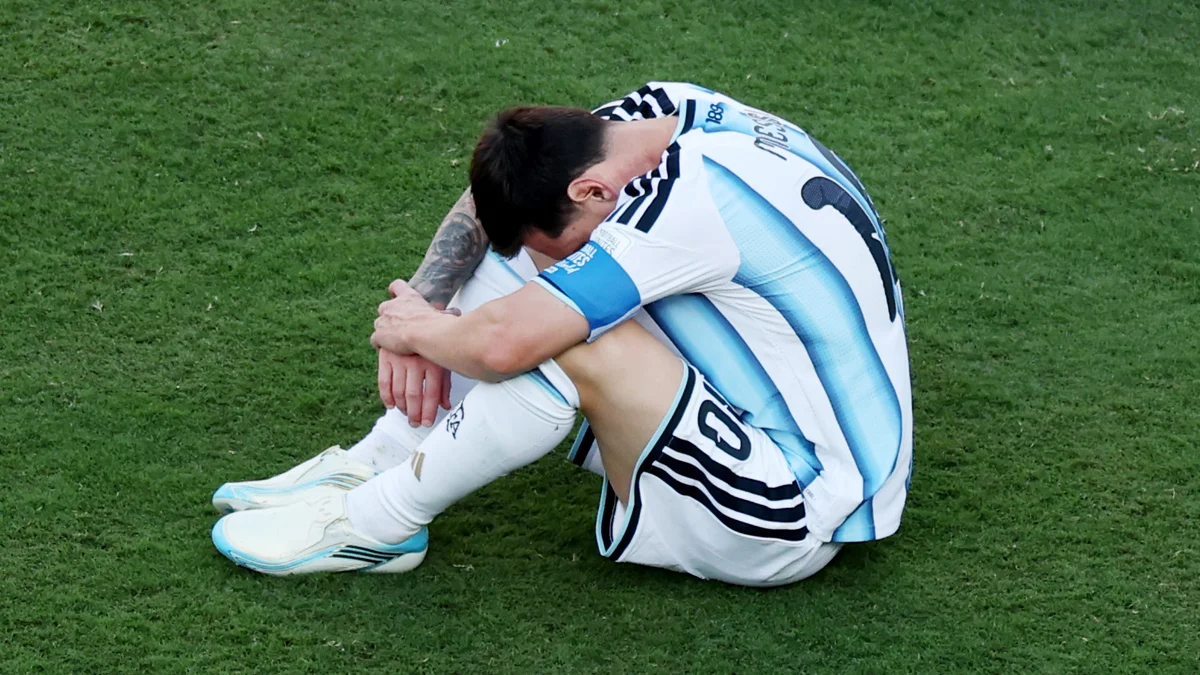
The final whistle triggered a wave of emotion. While Spain celebrated, Messi was left distraught. The tears that streamed down his face as FIFA president Gianni Infantino draped a silver medal over his neck painted a picture of a man wrestling with the end of an era. This was a stark contrast to the jubilation of Qatar just four years prior.
Whether this was Messi’s last dance on the international stage remains the subject of intense speculation. He will be 43 by the time the 2030 World Cup arrives, and despite his enduring passion and ability to adapt his game, the relentless march of time is an opponent even he cannot defeat.
In the end, the 2026 final will not be remembered for a moment of individual genius but for a display of complete team domination. Spain didn’t just beat Argentina; they made them disappear. For Messi, who has given so much to the game, it was a heartbreakingly quiet end to a World Cup campaign that started with so much promise. He goes home empty-handed, but the debate about his status as the greatest of all time was settled long before this final whistle ever blew.
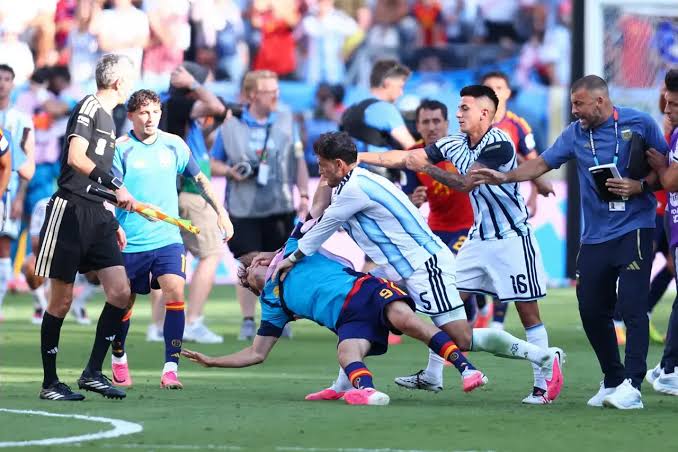
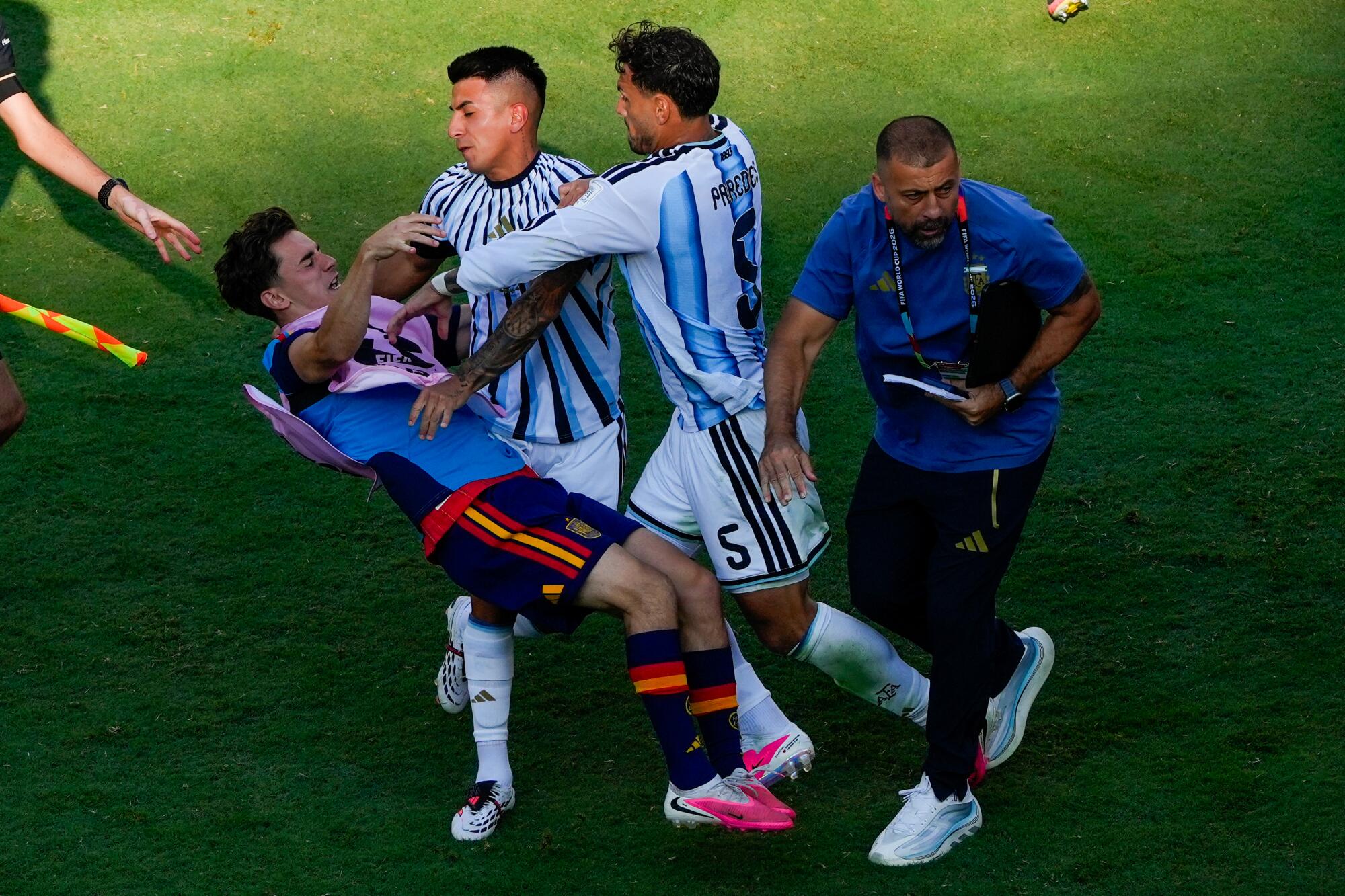
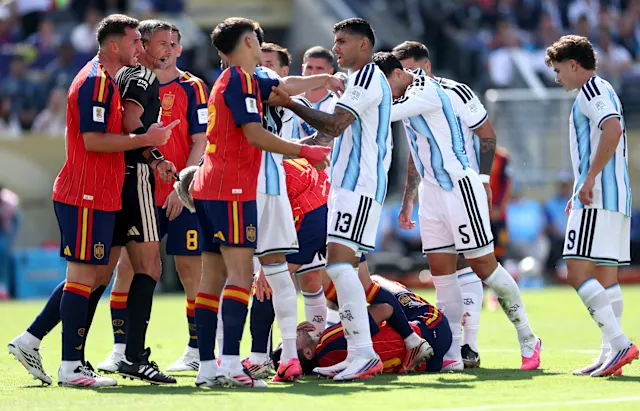
FIFA have confirmed that they are investigating what happened in the aftermath of Spain’s World Cup win over Argentina