The Western media’s obsession with Africa’s woes is not accidental; it is a structural bias rooted in a colonial mindset that struggles to portray Africans as agents of their own destiny.
IMPORTANT: Reclaiming the True Story of Africa
Zvakwana Nomore Sweto
For decades, the image of Africa in the global media has been framed through a narrow, distorted lens. It is a portrait painted in shades of despair; of dusty villages, hungry children, and failed states. This narrative, repeated endlessly in Western newspapers, television broadcasts, and documentary films, has become the default setting for how the world views an entire continent of 1.5 billion people and 54 uniquely diverse nations.
This is not just lazy journalism; it is a harmful and outdated caricature. It is a story told about Africa, not by Africa. And it is a story that costs the continent dearly; an estimated $4.2 billion every year in higher borrowing costs and lost investment, money that could otherwise fund education, healthcare, and infrastructure. The time has come to condemn this narrative, acknowledge the internal failures that have fueled it, and recognize that only Africans now have the mandate to tell their own, multifaceted story.
According to Dr. Arikana Chihombori, the narrative that Africa doesn’t need help. She argues that Africa has been, and still is, supporting the economic development of Western nations.
The Western media’s obsession with Africa’s woes is not accidental; it is a structural bias rooted in a colonial mindset that struggles to portray Africans as agents of their own destiny. The archetypal example remains, The Economist magazine’s infamous May 2000 cover, which branded Africa “The Hopeless Continent,” featuring a dark silhouette of a man with a weapon. While the magazine has since retracted that sentiment, the template remains.
Selective storytelling in journalism has real-world consequences. When Western outlets obsessively covered the 2014 Ebola crisis, the word “Ebola” appeared in US media more often than “United States” and “summit” combined during the historic US-Africa Leaders Summit, drowning out news of billions of dollars in investment deals. This creates a perception of a continent permanently on the brink, scaring off tourists and convincing investors that the risk is too high, regardless of a country’s actual economic fundamentals.
This narrative is not just misleading; it is dehumanizing. It strips Africans of their complexity, their innovation, and their agency. It refuses to see the continent as a place of solutions, not just problems. When Rwanda deploys peacekeeping forces under transparent UN mandates to stabilize the Central African Republic, Western outlets cynically frame it as shadowy collusion with mercenaries, unable to process the idea of an African nation acting as a capable, strategic leader.
The reality is that Africa is a hub of innovation and growth. It is home to young tech entrepreneurs in Lagos, medical professionals doing exceptionally well in South Africa, life-saving solar-powered medical innovations by Kenyan engineers, and groundbreaking agricultural research by Zambian scientists that is helping farmers achieve food sovereignty. It is a continent where, despite immense challenges, the IMF projects economic growth to accelerate, demonstrating resilience in a turbulent global economy.
However, it would be a disservice to lay the blame for Africa’s image problems solely at the feet of foreign journalists. We must also confront an uncomfortable truth: corrupt and self-serving African leaders have provided ample fodder for these negative stereotypes and have actively sabotaged the continent’s progress from within.
These are the “drunken captains” of the ship of state, who treat public treasuries as personal bank accounts. The stories are tragically familiar. In Angola, José Eduardo dos Santos presided over an oil-rich nation for 38 years, leaving behind a legacy not of shared prosperity, but of entrenched cronyism. The Luanda Leaks exposed how his family built a global empire worth billions through opaque state deals, while the majority of Angolans lived on less than $2 a day.
In the Democratic Republic of Congo, Joseph Kabila’s nearly two-decade rule was marked by the systematic plunder of the country’s vast mineral wealth. Investigations have traced millions of dollars through shell companies linked to his family, money that should have built schools, hospitals, and improved the country’s infrastructure. In Nigeria, a nation of immense wealth and potential, political leaders display obscene opulence, multi-car motorcades, private jets, and lavish estates; while the country grapples with mass unemployment and the highest number of out-of-school children in the world.
I am not going to speak about Zimbabwe today, where certain individuals have explicitly shown an ‘I don’t care attitude’ when it comes to abuse of power and resources meant for the public to sponsor their lavish lifestyle.
These leaders have not only stolen their people’s present but have also mortgaged their future, reinforcing the very image of a “hopeless continent” that the West is so eager to consume. Their failures have given the cynical Western media a convenient truth to hide behind, allowing them to ignore the bigger, more hopeful picture.
Scramble for Talent
Nowhere is the complex relationship between Africa and the West more visible than in sports, particularly football. For instance, when we watch the French national team, we see the dazzling talents of players with roots in Mali, Senegal, Algeria, and Cameroon. They are celebrated as French heroes, products of a system that has successfully integrated and nurtured their abilities.
But this success story has a dark underbelly. The football industry has become a new frontier of exploitation, a “two-faced hope” for thousands of young Africans. Deceitful agents and informal networks prey on the dreams of teenagers in Ghana, Ivory Coast, and Cameroon, promising them careers in Europe. For the vast majority, the dream turns into a nightmare. They are stranded as undocumented migrants, playing for small clubs under exploitative conditions, or simply abandoned once their usefulness runs out. The system extracts their talent and labor, but offers no safety net.
In some cases, the desperation to reach Europe leads to elaborate fraud. In one instance, a man posing as the coach of Cameroon’s national handball team was caught trying to smuggle 19 compatriots into Switzerland under the guise of a sporting event. These are the tragic, extreme outcomes of a system where European clubs and nations benefit from a pipeline of African talent, while the structures that produced those players, local academies, schools, and communities; see little to no return.
Western nations are happy to benefit from the fruit of African talent, but rarely invest in the roots. This is the modern iteration of resource extraction: instead of oil and minerals, it is human potential that is being harvested, with the profits and glory accumulating elsewhere.
For too long, Africa has allowed its image to be defined by others, by Western media outlets with colonial hangovers and by its own failing leaders. This must end. The mandate to tell Africa’s story now rests firmly with Africans themselves.
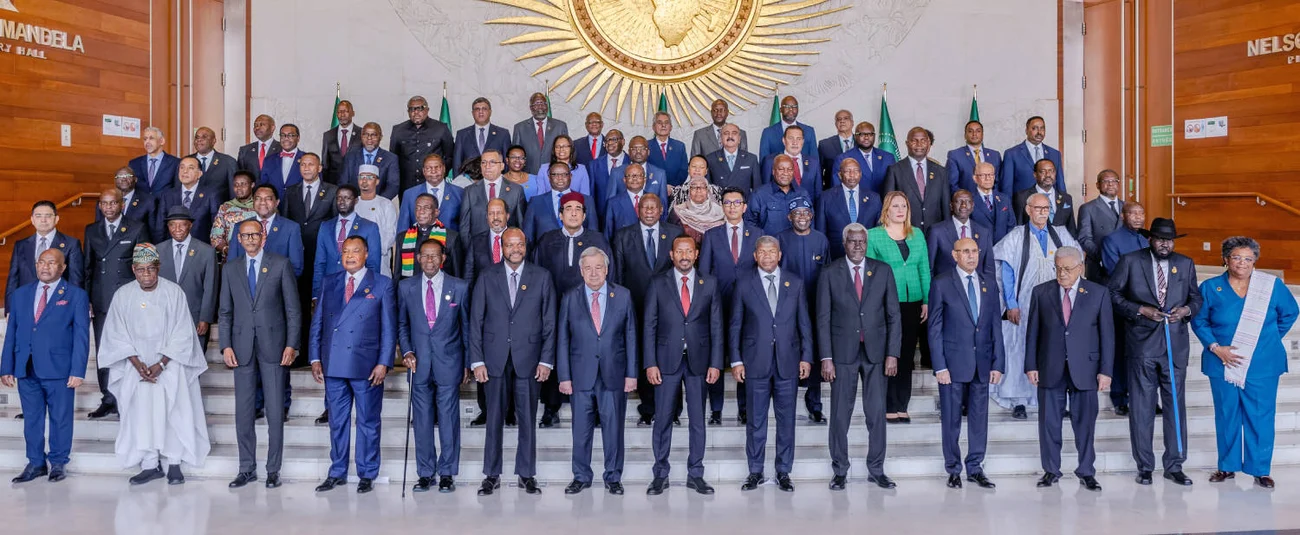
This means governments, regional bodies like the African Union, and civil society must actively invest in counter-narratives. It means holding our own leaders accountable. The fight for a positive African narrative is inseparable from the fight for good governance and an end to corruption. A continent that confronts its internal failures with honesty and justice is a continent that can face the world with strength.
The world needs to see the real Africa, not the one-dimensional tragedy peddled by Western newsrooms, but a continent of staggering diversity, resilience, creativity, and undeniable momentum. It is a story of challenges, yes, but also of solutions. It is a story of 1.5 billion people who are no longer waiting for their story to be told. They are telling it themselves.